Pro Press Tool vs. Soldering – Which Is Better for Plumbing in 2025?
or decades, plumbers and homeowners relied on soldering to join copper pipes. It worked but it was slow, messy, and required skill. Then came the pro press tool, which changed plumbing forever.
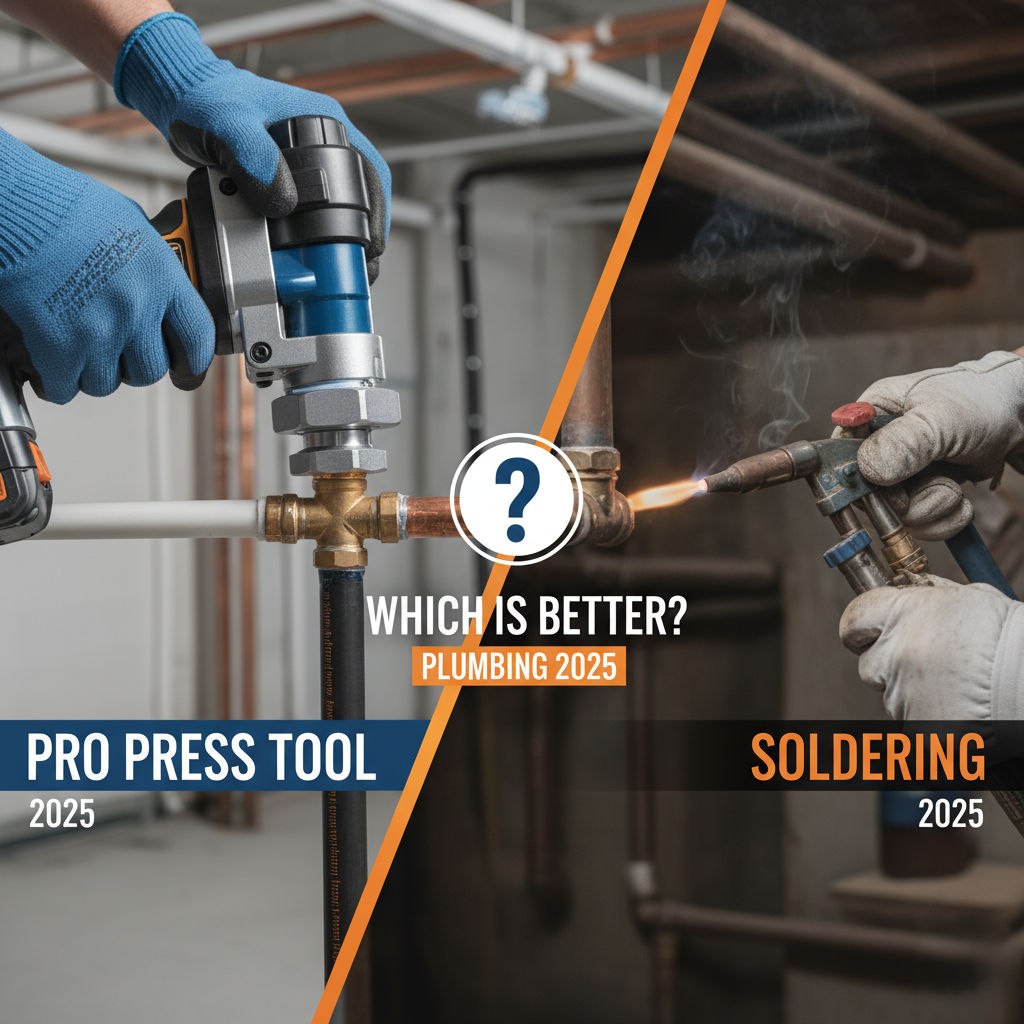
Instead of heating joints with an open flame, the pro press method uses mechanical pressure to create clean, watertight connections in seconds.
In this guide, we’ll compare pro press vs. soldering side by side speed, safety, cost, and long-term reliability – so you can decide which method makes the most sense for your next project.
💡 Related reading: How to Use a Pro Press Tool (Step-by-Step Guide)
For tool recommendations, check out Best Pro Press Tools for 2025.
🧰 How Each Method Works
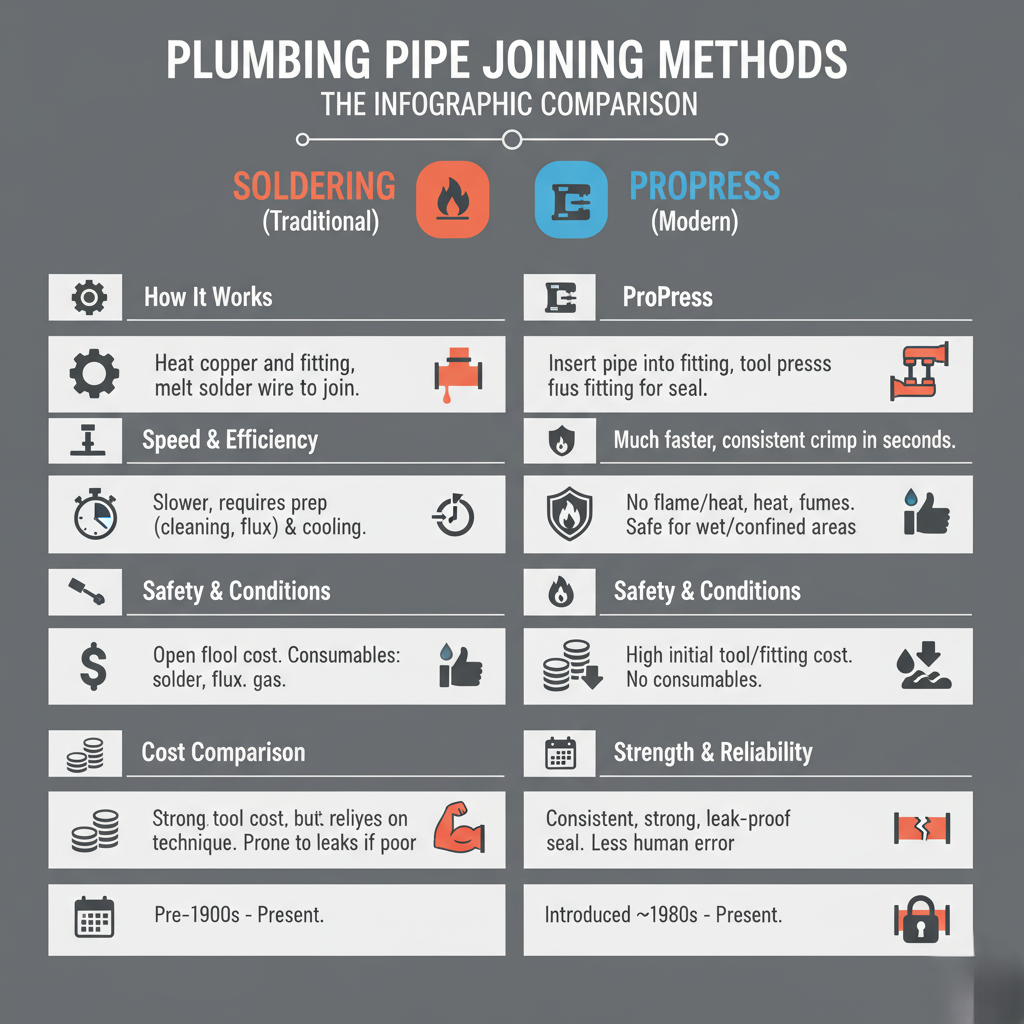
🔩 Soldering (Traditional Method)
Soldering uses heat and flux to melt a filler metal (solder) into the joint between copper pipes. When it cools, it hardens and seals the connection.
It’s effective – but requires open flames, experience, and precise cleaning to avoid leaks.
⚙️ Pro Press (Modern Method)
The pro press tool uses a battery-powered or hydraulic press to crimp fittings around pipes. Inside each fitting is an O-ring that compresses and forms a tight seal.
No heat, no chemicals, no waiting for cooling. Each joint takes under 10 seconds to complete.
⏱️ Speed and Efficiency
| Factor | Soldering | Pro Press |
|---|---|---|
| Time per joint | 3-5 minutes | 5-10 seconds |
| Setup | Cleaning, flux, heat | Cut and press |
| Cooling time | Required | None |
| Skill level | High | Moderate |
According to Viega’s ProPress® data, switching to press fittings can reduce installation time by up to 60%.
That’s why most commercial contractors now prefer press systems for large-scale plumbing, HVAC, and refrigeration jobs.
🔥 Safety and Work Conditions
Soldering involves open flames and chemical flux, which means:
- Fire hazards in confined or wood-framed areas
- Smoke, fumes, and residue
- Mandatory fire watch in commercial buildings
Pro press tools, by contrast, use cold connections – no risk of ignition, no toxic smoke, and minimal cleanup.
This makes them perfect for hospitals, schools, and retrofit work.
🔗 Reference: RIDGID Pressing Tool Safety Guidelines
💸 Cost Comparison
| Expense | Soldering | Pro Press |
|---|---|---|
| Tool Cost | $50-$200 (torch, flux, solder) | $600-$2,500 (press tool + jaws) |
| Fitting Cost | Low | Moderate |
| Labor Time | Higher | Lower |
| Total Project Cost | Cheaper upfront | Lower long-term |
While the initial investment in a pro press tool is higher, the labor savings quickly offset it – especially on multi-joint or repeat jobs.
If you’re deciding which model to buy, explore our comparison: Best Pro Press Tools for 2025.
🧱 Strength and Reliability
Both methods produce long-lasting joints when installed correctly, but there are differences:
Soldering:
- Relies on user skill for proper cleaning and heat control
- Joints can weaken from vibration or poor solder flow
Pro Press:
- Factory-calibrated pressure ensures consistent sealing
- O-rings create watertight, vibration-resistant joints
- Leak detection features (like Viega’s Smart Connect) make testing easy
In short, press fittings remove the guesswork – which means fewer callbacks and repairs.
🧰 Where Each Method Works Best
| Scenario | Recommended Method |
|---|---|
| Tight spaces, low ventilation | Pro Press |
| Quick repair work | Pro Press |
| Large new construction | Pro Press |
| Occasional DIY home repair | Soldering (cheaper setup) |
| Fire-restricted areas | Pro Press |
| Low-budget, small project | Soldering |
If you handle multiple jobs per month, a press tool pays for itself in time savings within the first few projects.
⚙️ Long-Term Maintenance
Soldered Joints
Once done properly, soldered joints last for decades – but require careful installation. Any leftover flux can cause corrosion over time.
Pressed Joints
Pressed joints are virtually maintenance-free. You only need to inspect O-rings and jaws periodically.
🧩 Environmental Impact
Soldering releases smoke and flux residue, which can contain chemicals like lead (in older solders).
Press fittings are cleaner – no emissions, no combustion, and fewer wasted materials.
Modern press systems also reduce water waste during testing since fittings can be dry-fit and re-aligned before pressing.
Frequently Asked Questions
Does Pro Press last as long as soldering?
Yes. When installed correctly, press fittings can last 50 years or more, equal to soldered joints. O-rings are made from high-quality EPDM rubber designed for long-term performance.
Can Pro Press fittings fail?
Only if they’re installed incorrectly for example, not fully inserting the pipe or pressing the wrong size jaw. Following manufacturer instructions eliminates most failures.
Is Pro Press more expensive than soldering?
The tools cost more upfront, but press systems save so much time that the total project cost is usually lower. For one-off home repairs, soldering can still make sense.
Do Pro Press fittings need special maintenance?
No. Just keep fittings and O-rings clean before pressing. Store the tool in a dry case and lubricate the jaws periodically.
Which is safer for indoor work?
Pro Press, by far. Since there’s no flame or smoke, it’s safer for wood structures and confined environments.
Can you mix soldered and pressed sections?
Yes, as long as they’re properly cleaned and tested. Many commercial systems combine both, using press fittings in critical areas.
Final Verdict
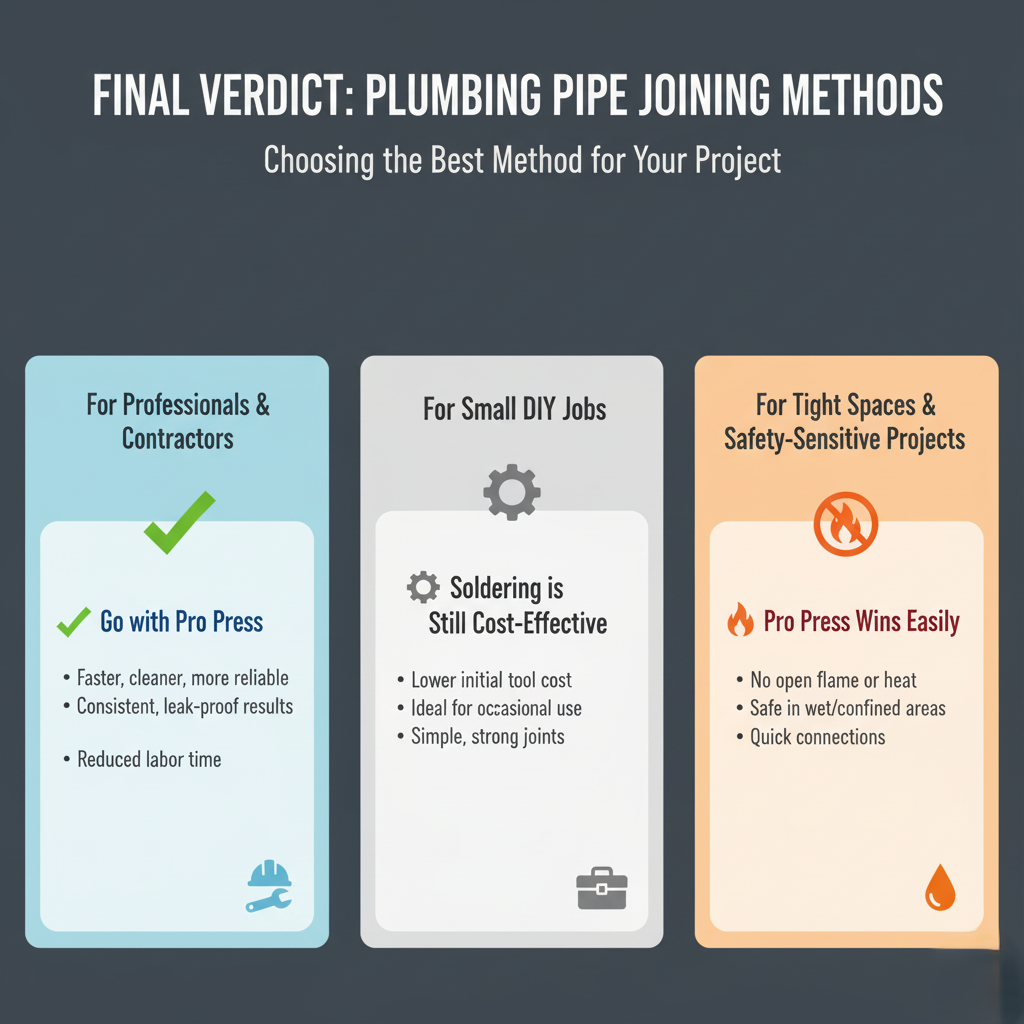
Both methods can produce excellent results, but the difference lies in speed, safety, and consistency.
| Verdict | Recommendation |
|---|---|
| For professionals and contractors | ✅ Go with Pro Press – faster, cleaner, more reliable |
| For small DIY jobs | ⚙️ Soldering is still cost-effective |
| For tight spaces or safety-sensitive projects | 🔥 Pro Press wins easily |
If you’re ready to invest in your first press system, read our full review:
👉 Best Pro Press Tools for 2025